About this attraction
Rising along the border between Uganda and the Democratic Republic of the Congo, the Rwenzori Mountains form one of Africa’s highest mountain ranges.
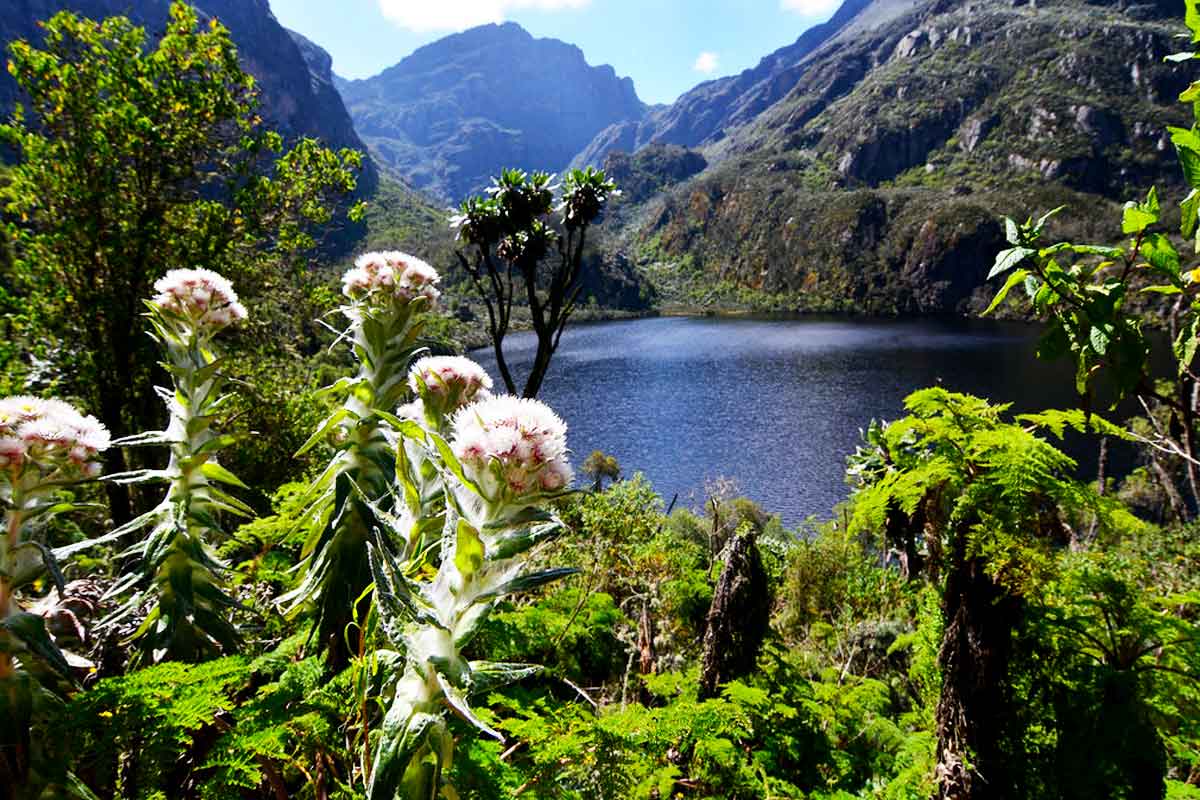
Often referred to as the Mountains of the Moon, the Rwenzoris are known for their steep valleys, rocky peaks, mountain forests, and unusual high-altitude vegetation.
The range includes Mount Stanley, whose Margherita Peak reaches approximately 5,109 metres above sea level, making it the third-highest summit in Africa.
Unlike the volcanic mountains found elsewhere in East Africa, the Rwenzoris were formed primarily through tectonic uplift associated with the East African Rift system.
Their landscapes change considerably with altitude. Lower slopes support forests and agricultural communities, while higher elevations contain bamboo, heath, giant lobelias, groundsels, alpine vegetation, and areas of permanent ice.
The Ugandan section of the range includes Rwenzori Mountains National Park, a UNESCO World Heritage Site recognised for its exceptional natural beauty and biodiversity.
Things to See and Do
Mountain Trekking
The Rwenzoris are among Africa’s most challenging trekking destinations. Multi-day expeditions take visitors through forests, valleys, wetlands, and high-altitude terrain.
Routes vary in length and difficulty, with some reaching the higher peaks of the range.
Climbing Margherita Peak requires appropriate equipment, physical preparation, and experienced mountain guides.
Nature Walks and Short Hikes
Visitors do not need to attempt a major summit to experience the Rwenzori Mountains.
Shorter guided walks around the lower slopes provide opportunities to explore mountain vegetation, observe birds, and enjoy views of the surrounding countryside.
Discover Unique Mountain Vegetation
One of the Rwenzoris’ most distinctive features is the vegetation found at higher elevations.
Giant lobelias, groundsels, moss-covered trees, and other plants adapted to cool, wet mountain conditions create landscapes unlike those found in Uganda’s lower-altitude forests and savannahs.
Birdwatching and Wildlife
The Rwenzori Mountains support a variety of wildlife, including several species associated with the Albertine Rift.
Birdwatchers may encounter species such as the Rwenzori turaco and other birds adapted to montane forest habitats.
Explore Mountain Communities
Communities living around the Rwenzori foothills have long depended on the mountains for agriculture, water, and other natural resources.
Guided community experiences can provide insights into local livelihoods, farming practices, and the cultural importance of the mountains.
Planning Your Visit
Getting there: The Rwenzori Mountains extend across western Uganda. Major trekking access points are located around Kasese District, south of Fort Portal.
When to visit: Trekking is possible throughout the year, although rainfall, mud, and changing mountain weather can affect trail conditions.
What to bring: Appropriate hiking footwear, waterproof clothing, warm layers, and suitable trekking equipment. High-altitude expeditions require additional specialised gear.
Guides and permits: Trekking within Rwenzori Mountains National Park requires appropriate arrangements through authorised operators and park authorities.
Fitness: Shorter walks may be suitable for visitors with moderate fitness, while longer treks and summit expeditions require significant preparation.
Why Visit?
The Rwenzori Mountains offer a different side of western Uganda, with landscapes ranging from tropical forests to high-altitude alpine environments.
Whether exploring the foothills or undertaking a multi-day trek, visitors can experience one of Africa’s most distinctive mountain ecosystems.